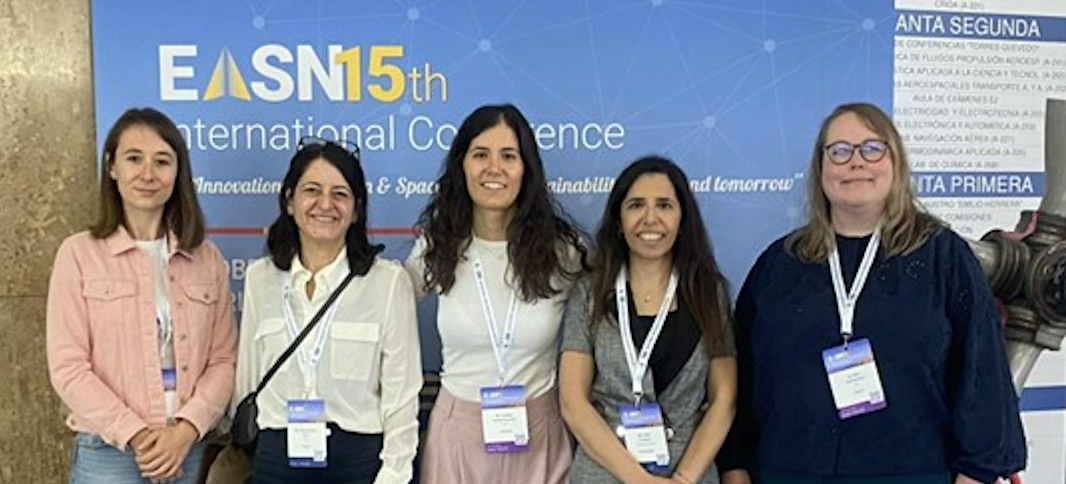
On October 15th, the ASTRAIOS project hosted a dedicated session on space sector skills as part of the 15th EASN International Conference in Madrid. The session highlighted the results achieved so far by ASTRAIOS and emphasised the growing momentum behind European efforts to equip the space workforce with the skills needed for the future.
Funded under Horizon Europe and launched in January 2023, ASTRAIOS (Analysis of Skills, Training, Research and Innovation Opportunities in Space) has been analysing education, training, and skills demand across the European space ecosystem. With its completion set for December 2025, the project is delivering crucial insights that will support long-term planning and policymaking for skills development in the sector.
The ASTRAIOS team, represented by most project partners during the session, engaged a diverse audience of students, graduates, and early-career professionals. They showcased the project’s key outputs, all of which are openly available via the ASTRAIOS website and social media:
- A comprehensive database of space-related education and training programmes across the EU and the UK.
- An in-depth analysis of the European space workforce, including identification of skills gaps, regional disparities, and mobility trends.
- A suite of open-access MOOCs tailored to emerging upskilling and reskilling needs in the sector.
- A collection of video testimonials featuring professionals from different corners of the space industry, highlighting varied career paths and entry points.
These results not only support the EU’s Pact for Skills but also serve as foundational knowledge for the SPACE4GEO Large-scale Skills Partnership, a key EC initiative promoting upskilling, reskilling, and talent attraction in the downstream space and geoinformation domains.
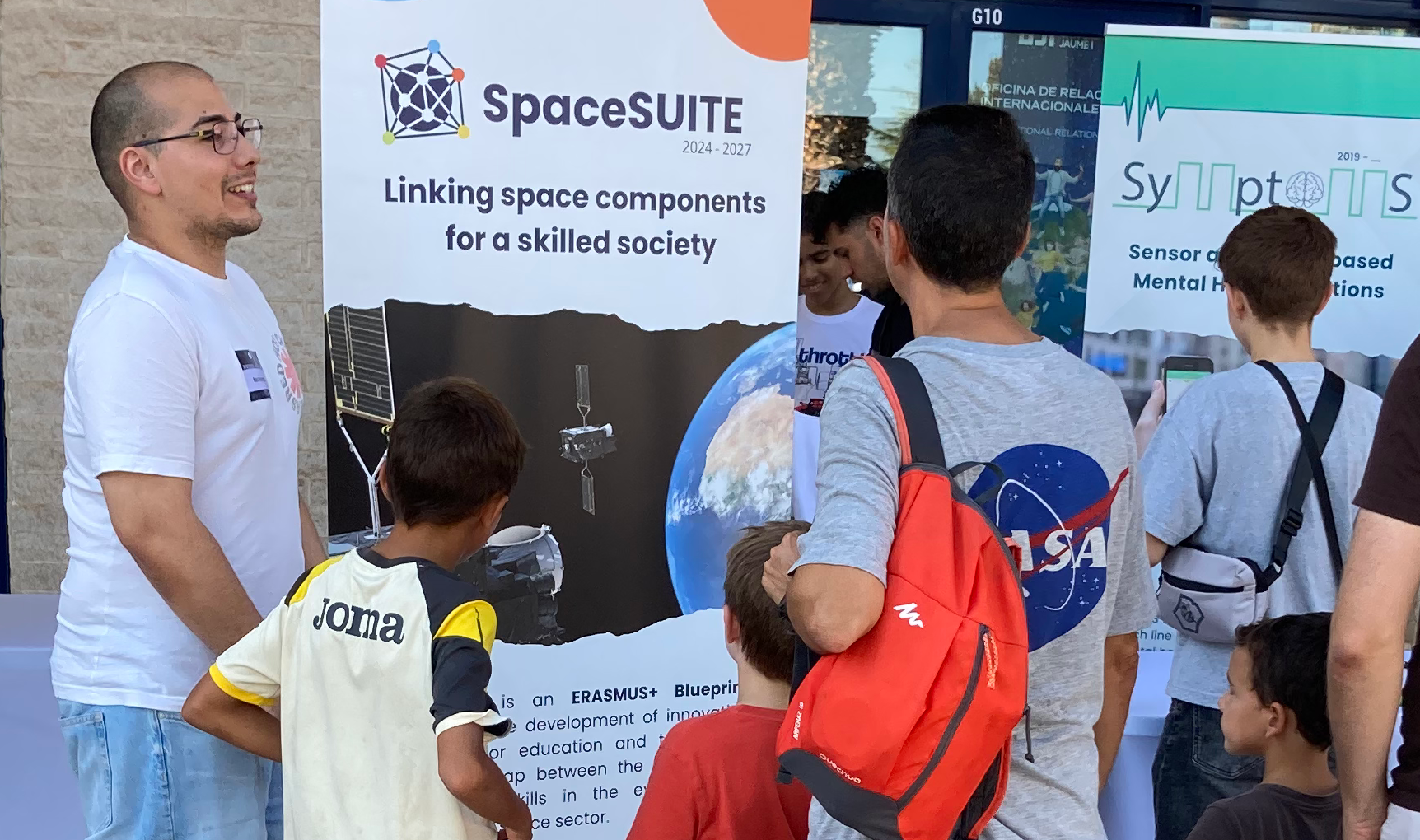
SpaceSUITE: From Insight to Action
Within the session, SpaceSUITE was highlighted as the flagship implementation project of the SPACE4GEO initiative.
Where ASTRAIOS has mapped the terrain, SpaceSUITE is actively shaping the pathways: developing concrete, user-driven solutions for creating skills, designing modular training programmes, and fostering collaboration between academia, industry, and public authorities with a distinctive focus on the downstream part of the space sector.
The connection between the two projects illustrates how cross-project collaboration can accelerate impact. Together, they represent a cohesive continuum of action, from research and needs assessment to capacity-building and implementation, united under the broader vision of strengthening Europe’s competitiveness and autonomy in space.